

Medical Evacuation
How much does an air ambulance really cost, and what affects the price? Research show costs can reach up to $80,000 without coverage. Let’s break down the key factors and how you can prepare.

Bryanna Moore, Senior Product Manager
·Published on January 29th, 2026
While a scenic drive from San Francisco to San Jose (roughly 52 miles) may cost you a tank of gas, an air ambulance flight covering that same distance could cost you $12,000 to $25,000.
This highlights the importance of preparing for unexpected medical expenses like air ambulance costs while traveling. Without medical support, the financial impacts are potentially devastating. Knowing how air ambulance costs are determined will help you choose the right protection in the event of an emergency.
Since most private travel is priced per hour, there is a misconception that the air ambulance cost per hour is how the price is calculated. In most cases, air ambulance prices include a base rate plus additional charges from cost factors like per-mile fees. The average cost per mile estimate is between $50 and $350.
Below are estimated air ambulance costs by distance:
| Distance | Average domestic per-mile cost | Average international per-mile cost |
| Under 100 Miles | $19,800 | $34,650 |
| 100-500 Miles | $60,000 | $105,000 |
| 500+ Miles | $100,000 | $175,000 |
| * Prices are calculated assuming the average cost per mile is $200 for domestic flights and $350 for international flights. | ||
For example, a flight with a $20,000 base fee plus $200 per mile could cost $40,000 or more for a 100-mile trip, before adding medical staffing or international fees.
The cost of an air ambulance flight can be significantly higher for international flights than domestic flights due to increased distance and other factors associated with international travel.
In 2023, Emergency Assistance Plus® (EA+®) medical transports showcased interesting ambulance facts: Only 16% were domestic, while a surprising 83% were international.
While distance is a major indicator of air ambulance costs, a lack of coverage can drastically increase the price. Medical coverage options, such as travel assistance plans or insurance, cost significantly less than paying for air ambulance services out of pocket.
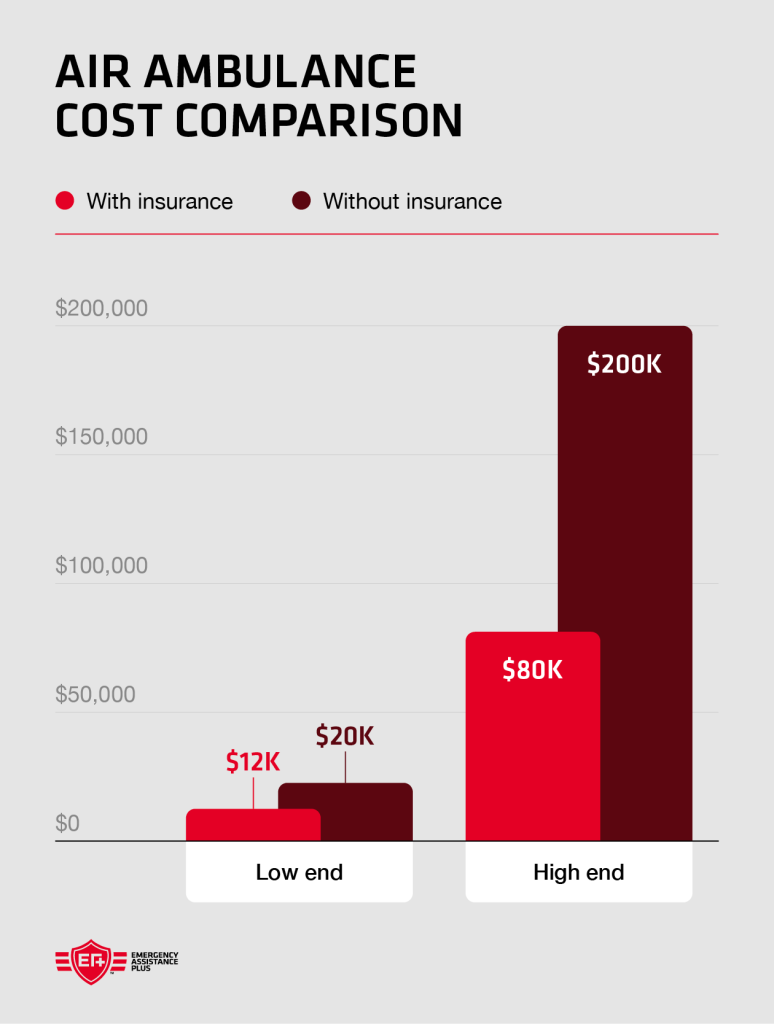
The cost of an air ambulance is calculated on a trip-by-trip basis. It considers factors such as the flight distance, the level of medical care required, and the patient’s medical coverage, such as medical transport insurance. International travel is one factor that can significantly increase the cost.
The type of aircraft used greatly affects the total cost of a life flight. Typically, these flights are on fixed-wing aircraft (airplanes) or rotor-wing aircraft (helicopters).
Fixed-wing aircraft, such as a Medevac plane, are generally used for longer air ambulance flights due to their increased fuel capacity and space for additional medical equipment or personnel.
Rotor-wing aircraft are well-suited for emergency and short-distance flights because they can take off and land quickly and access locations that fixed-wing aircraft cannot.
Distance is a major factor in the cost of many air ambulance flights. In addition to a base fee, charges are often calculated per mile.
International flights frequently involve greater distances, which can result in higher costs than domestic flights. Delays due to weather or air traffic may also increase the time and cost of longer flights.
The transportation provider you choose can affect the cost of an air ambulance. Air ambulances are typically operated by:
While private air ambulance companies tend to have the highest costs, the actual price will fluctuate based on the level of competition and demand for providers in your specific region.
So, how much is an ambulance ride without insurance?
The cost of an air ambulance without insurance or other medical coverage can be astronomical. There might still be some out-of-pocket expenses or reimbursement claims with insurance coverage, but they’re significantly lower compared to not having coverage.
Under the No Surprises Act, many privately insured patients are protected from surprise billing for out-of-network or out-of-state accident emergency air ambulance services within the U.S.
However, deductibles, coinsurance, and coverage limits may still apply. This protection does not typically extend to uninsured patients or international flights.
Travel assistance membership plans like EA+ function differently from traditional travel insurance. These plans usually charge an annual membership fee to coordinate and fund care, like air ambulance costs, instead of reimbursing members for out-of-pocket expenses.
Level of medical care
Air ambulances requiring additional medical personnel and specialized equipment to manage critical injuries and life-threatening conditions may lead to higher trip costs. Examples include:
If you have preexisting medical conditions or are visiting a remote location, it may be worth considering medical transport insurance or other travel medical protection in case you need an air ambulance.
Other financial considerations contribute to the total cost of an international air ambulance flight besides the higher per-mile costs. These include:
If you end up needing an air ambulance due to a medical emergency, here are different ways to help with the cost:
Two common ways to help pay for air ambulance costs are through travel insurance and travel assistance plans. While both choices can decrease the overall cost of an air ambulance flight, their scope of services, costs, and applicable situations differ.
Travel assistance is a service that provides help to individuals and families who may need it while traveling. It’s designed to assist people during and after medical emergencies. Travel insurance offers financial protection and coverage for various risks and incidents associated with traveling, provided through pre-approved premiums.
Travel assistance helps with emergency medical costs through a yearly membership fee, helping you avoid large, surprise expenses. Travel insurance covers certain risks but often requires you to pay co-pays and deductibles when making a claim.
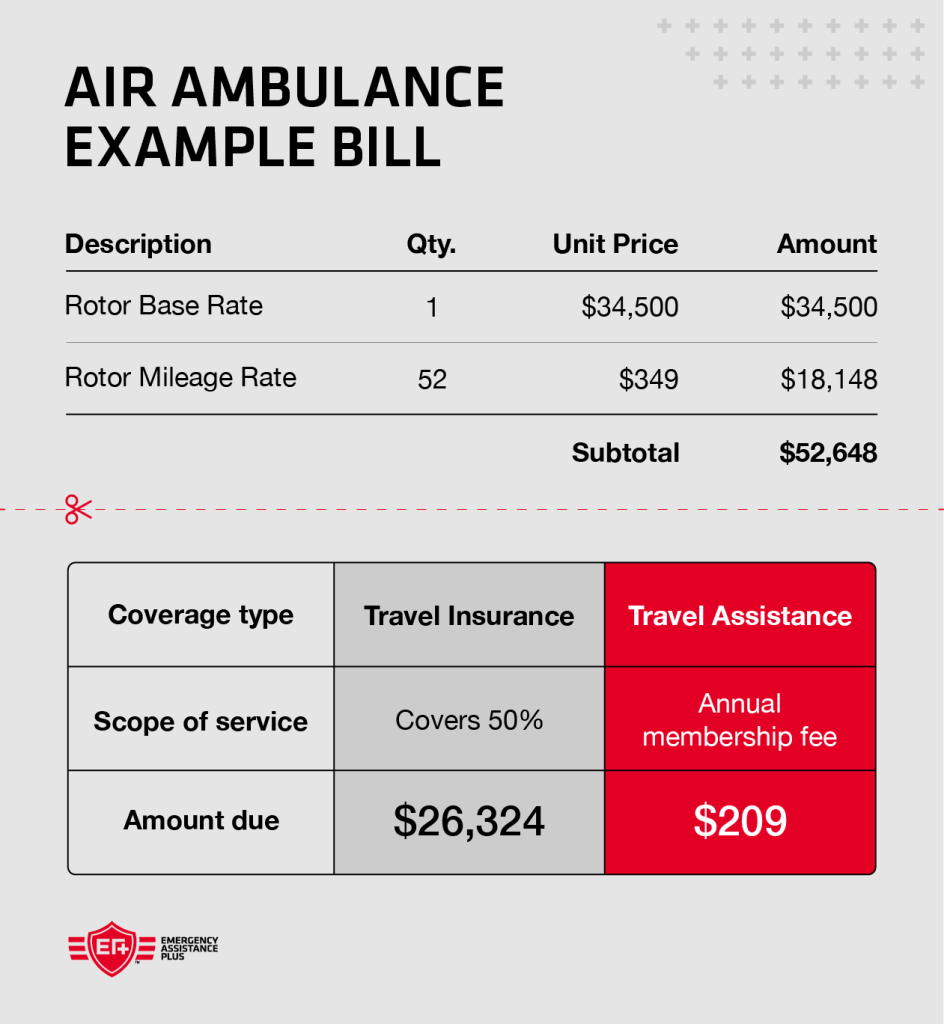
The price difference between travel assistance vs. travel insurance depends on whether you’d prefer to pay out-of-pocket for emergency medical services or through an annual membership fee.
When traveling, it is important to prepare for events and medical emergencies that can lead to unexpected expenses like air ambulance costs.
Protect your finances and peace of mind in an emergency like a medical evacuation by finding the right partner. For a yearly membership fee, EA+ coordinates care in the event of a medical emergency during travel. With one call, you are supported by an expert team that’s equipped and ready to get you the help you need.
An air ambulance is a specially designed helicopter or fixed-wing plane equipped with medical equipment and staff to transport critically ill or injured patients over long distances to medical facilities.
An air ambulance costs between $12,000 and $25,000 with medical coverage.
Without insurance, air ambulances can cost between $20,000 and $80,000, depending on the distance.
While air ambulance services are typically covered by insurance, patients may still be responsible for co-pays or other out-of-pocket expenses, depending on their coverage.
Medicare coverage may not be available during international travel unless specific exceptions apply, or additional supplements have been purchased.
Air ambulances can also be used for long-distance hospital transfers of patients who are unable to travel commercially, not just for life-threatening emergencies.
Helicopters usually cost less for short distances but are more expensive per mile. Fixed-wing aircraft cost more overall but are better suited for long-distance or international transport.
Yes. Membership plans like EA+ charge an annual fee and help with coordination and air ambulance costs, helping members avoid large out-of-pocket expenses.
Medicare may cover air ambulance services when medically necessary within the U.S., but coverage is limited and typically does not apply to international transport.
Bryanna has been with Emergency Assistance Plus (EA+) for nearly 20 years, starting in customer service and now, as Senior Product Manager, she is responsible for member experience – including ensuring that the services EA+ provides continues to meet the evolving needs of EA+ members. Bryanna is passionate about EA+ members and making sure that Emergency Assistance Plus delivers on its brand promise to get members home safely in their time of need.


Medical Evacuation · January 30, 2026

Medical Evacuation · January 29, 2026

Medical Evacuation · January 29, 2026

Medical Evacuation · January 29, 2026

Medical Evacuation · October 29, 2025

Medical Evacuation · April 29, 2025
