

Travel Tips
Understanding the cost of a cruise helps you choose the best cruise line, pick the right destination, and discover money-saving opportunities. This guide demystifies common cruise costs so you can get the most value from your trip.

Christine Raimer, Digital Commerce Leader
·Published on November 26th, 2025
Cruising is more popular than ever, with 370 cruise ships carrying approximately 704,200 passengers across the seas in 2025. If you’re interested in hopping on this growing trend, your first question is likely, “How much does a cruise cost?”
Determining the exact cost of a cruise can be challenging. Prices vary by cruise line, destination, duration, and cabin type. According to Cruise Market Watch, the average cruise cost (including fare and on-board spending) is $286.05 per passenger, per day. This totals $2,002.35 for a weeklong itinerary, with high-end options running much higher.
This guide to cruise costs breaks down what expenses to expect depending on your destination, cruise line, and desired add-ons. With a clear financial picture, you can stay within your budget and choose the right fit when planning an unforgettable cruise.
While average cruising costs are $286 per person, per day, prices vary depending on the cruise class and destination.
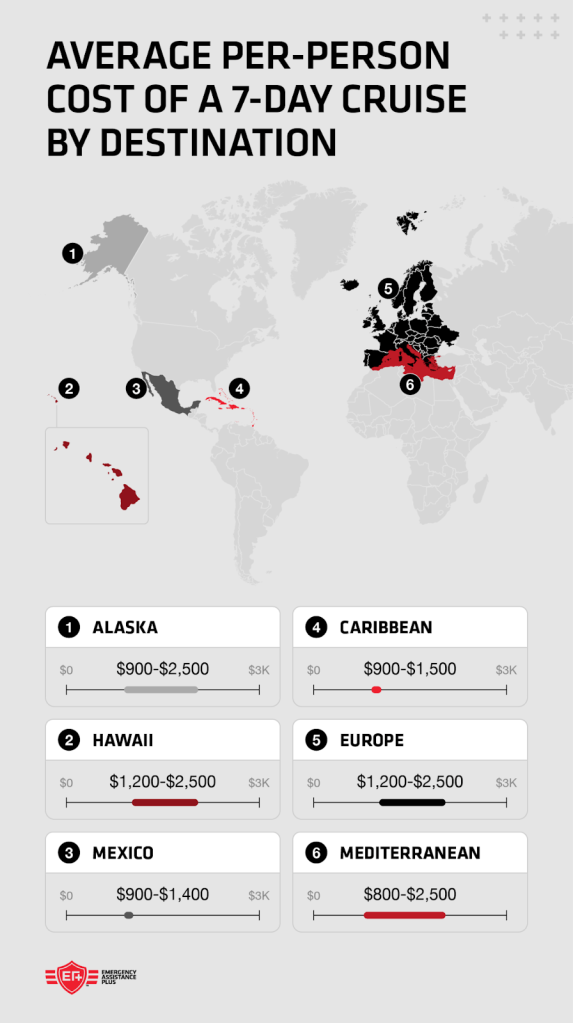
Budget-friendly cruise fares generally start at $150 per day, per passenger. Mid-range fleets typically begin at $300 per day, and luxury options often start at $500 per day and rise into the thousands. Cabin upgrades, premium dining, and exclusive activities drive up the daily cost.
Cruise prices tend to increase on smaller vessels headed to coveted destinations, like river cruises in Europe. Larger mainstream ships tend to feature shorter itineraries, travel shorter distances, and offer more affordable pricing.
| Cruise line | Category | Average cost (per person, per day) | Typical 7-night total | Includes |
| Carnival Cruise Line | Economical | ~$160 | ~$1,089 | Cabin, dining, activities, shows, youth clubs |
| Royal Caribbean | Mid-range | ~$200 | ~$1,127 | Cabin, dining, entertainment, gratuities, Wi-Fi |
| Princess Cruises | Mid-range | ~$200 | ~$1,400 | Cabin, meals, beverages, basic Wi-Fi, bundle options |
| Celebrity Cruises | Luxury | ~$111 | ~$777 | Cabin, all-inclusive meals and drinks, shore excursions, Wi-Fi |
| Regent Seven Seas Cruises | Luxury | ~$786 | ~$5,499 | Water-view cabin, dining, beer and wine, one tour per port stop |
| Viking River Cruises | River | ~$357 | ~$2,500 | River-view room, meals, beer and wine with lunch and dinner, Wi-Fi, one shore excursion per port |
| Lindblad Expeditions | Expedition | ~$1,557 | ~$7,500 | Cabin, dining, expedition gear, basic Wi-Fi |
Cruise fares typically include a room, standard meal package, daily on-board entertainment, and housekeeping. Beyond these basics, inclusions vary by cruise line. Some fleets bundle Wi-Fi, alcoholic drinks, and excursions into the fare, while others charge extra for these perks.
Cabin type is one of the biggest influences on the cost of a cruise. Ships typically offer interior, ocean view, balcony, and suite-style rooms. Each room category upgrade increases the price and may come with additional amenities and perks, such as concierge services.
Dining is generally included in the base cruise fare, giving guests access to at least one dining room and buffet throughout the day. Premium restaurants— offering options like steak, sushi, or international delicacies—are usually available at an additional cost.
Keep in mind that non-alcoholic drinks like coffee, soda, and tea are often included in your base fare, but alcohol and specialty beverages may not be.
Cruise lines prioritize on-deck entertainment and offer a wide range of options, from water park access to fitness centers. Look for daily itineraries that include free classes, trivia events, and parties. Guests can also enjoy musical productions, comedy shows and live music.
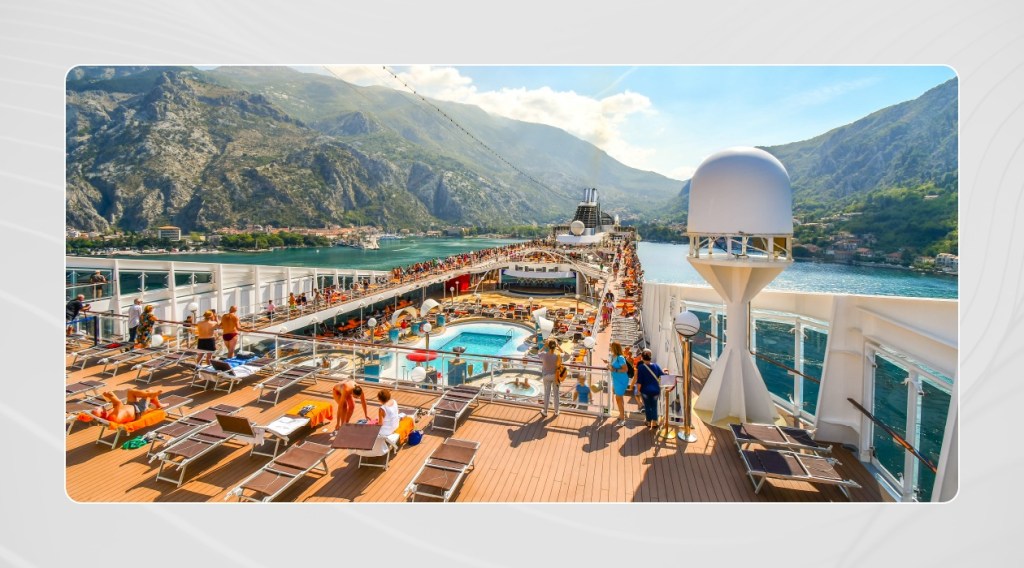
Free entertainment is often high-quality and diverse enough to appeal to multigenerational travelers. However, luxurious activities like spa treatments and premium shows typically come at an additional cost.
Extra expenses can more than double the price of your trip, and they can be hard to account for if they aren’t factored into the initial fare. Keep an eye out for these commonly overlooked cruise costs:
In addition to these set fees, there are other spending temptations to budget for before you set sail. Casinos offer poker tables, slot machines, and tournaments that can quickly become costly.
Onboard boutiques make it convenient to buy anything you want just steps from your cabin, so it’s easy to overspend. Premium dining and beverage options can also add to the overall cost of a cruise. Offboard spending, such as souvenir shopping and local restaurants, further increase the price of your trip.
With a bit of planning and know-how, you can enjoy cruise amenities at a fraction of the price. Here are some tried-and-true strategies for maximizing the value of your vacation.
Crowds and prices are at their highest during peak season. For a more affordable trip with less congestion onboard, cruise during the shoulder season. This is the sweet spot when weather is still mild but prices drop.
The exact timing for shoulder season depends on your destination. For those cruising the Caribbean, it’s between August and November. In Europe, aim to sail between March and April or October and November.
Similar to airfare, cruise prices fluctuate. Booking early and cruising during the off-season (region-dependent) will give you a better cabin selection and peace of mind that you paid the best price. Some lines run promotional perks for early bookers, such as cabin upgrades or waived gratuity fees. It’s a good option for senior travel, as details are arranged well in advance.
Last-minute fares surface during wave season, a promotional timeframe from January through March when cruise lines offer deep discounts in an effort to book remaining rooms. However, remember that you may have fewer itinerary and cabin options, so you’ll need to be flexible.
Bundled packages simplify logistics and save you money. Premium alcoholic beverage packages let you drink as much or as little as you want at a set price, helping you stay within your budget. Wi-Fi bundles can be cheaper than daily rates and often cover multiple devices and different plans to fit your needs.
Cruise lines also reward passengers who join their loyalty programs, which are free to sign up for and offer perks like discounted upgrades, onboard credits, and priority boarding.
An annual travel protection plan includes multiple cruises or adventures. These budget-friendly memberships provide medical transportation and logistical support in the event of an accident. They can save you thousands of dollars and may include additional benefits that travel insurance does not, such as companion support, medication assistance, and help with lost luggage.
If you need protection when traveling with medical needs, consider a membership with Emergency Assistance Plus® (EA+®). There are no age or preexisting condition restrictions, so cruisers of all kinds can benefit from its emergency protection services.
Learn moreSo, how much does a cruise cost, with all factors considered? Smart travelers know that the answer is usually beyond the initial fare and that it’s important to understand the extra costs before purchasing.
When you combine that know-how with savvy tricks like sailing during shoulder season and taking advantage of loyalty program perks, it’s possible to find the cruise of your dreams within your budget.
A travel assistance membership plan like EA+ can help if a medical emergency occurs while you’re away from home, allowing you to relax and enjoy your cruise. Sign up for an annual membership today for stress-free cruising year-round.
Enroll nowThese commonly asked questions can help you better understand what to expect when planning for cruise costs.
With the average cruise costing approximately $286 per day, per person, a seven-day cruise totals about $2,002 for each passenger. This includes the base fare as well as typical onboard spending. However, keep in mind that costs vary greatly depending on the season, destination, and cruise category you choose.
The cheapest month to cruise depends on your cruising destination. In the Caribbean, the off-peak months of September to November are most affordable due to hurricane season. In Alaska, early spring and late summer are priced competitively. In Europe, expect the lowest rates during early spring and late fall.
A three- to seven-day Disney cruise costs $2,000 on average, although the price varies depending on the season.
On average, a cruise costs $286 per day, per person. This specific amount varies depending on the cabin type, destination and time of the year.
Expect to pay between $15,000 and $50,000 per person for these itineraries, which last 90 to 180 days. Some of the best destinations for seniors can be found on full world cruises, as they eliminate the need to coordinate logistics or transportation between countries.
If you become sick or injured on a cruise, the ship can treat basic issues, but more serious conditions may require medical transportation off the ship or even a flight home. EA+ helps coordinate all of this, so you don’t have to manage the logistics or pay out-of-pocket for these arrangements.
Christine leads the digital and online experiences for Emergency Assistance Plus (EA+) and strives to delight visitors with engaging content and intuitive design. Christine is an avid backpacker, having recently completed the Colorado Trail and can often be found road tripping around the U.S. in her camper van, exploring beautiful destinations. A longtime EA+ member herself, Christine feels confident when traveling to new locations, because she knows that she’ll be protected if a medical emergency occurred while away from home.


Travel Tips · January 30, 2026

Travel Tips · January 7, 2026

Travel Tips · January 6, 2026

Travel Tips · January 5, 2026

Travel Tips · November 28, 2025

Travel Tips · October 31, 2025
